

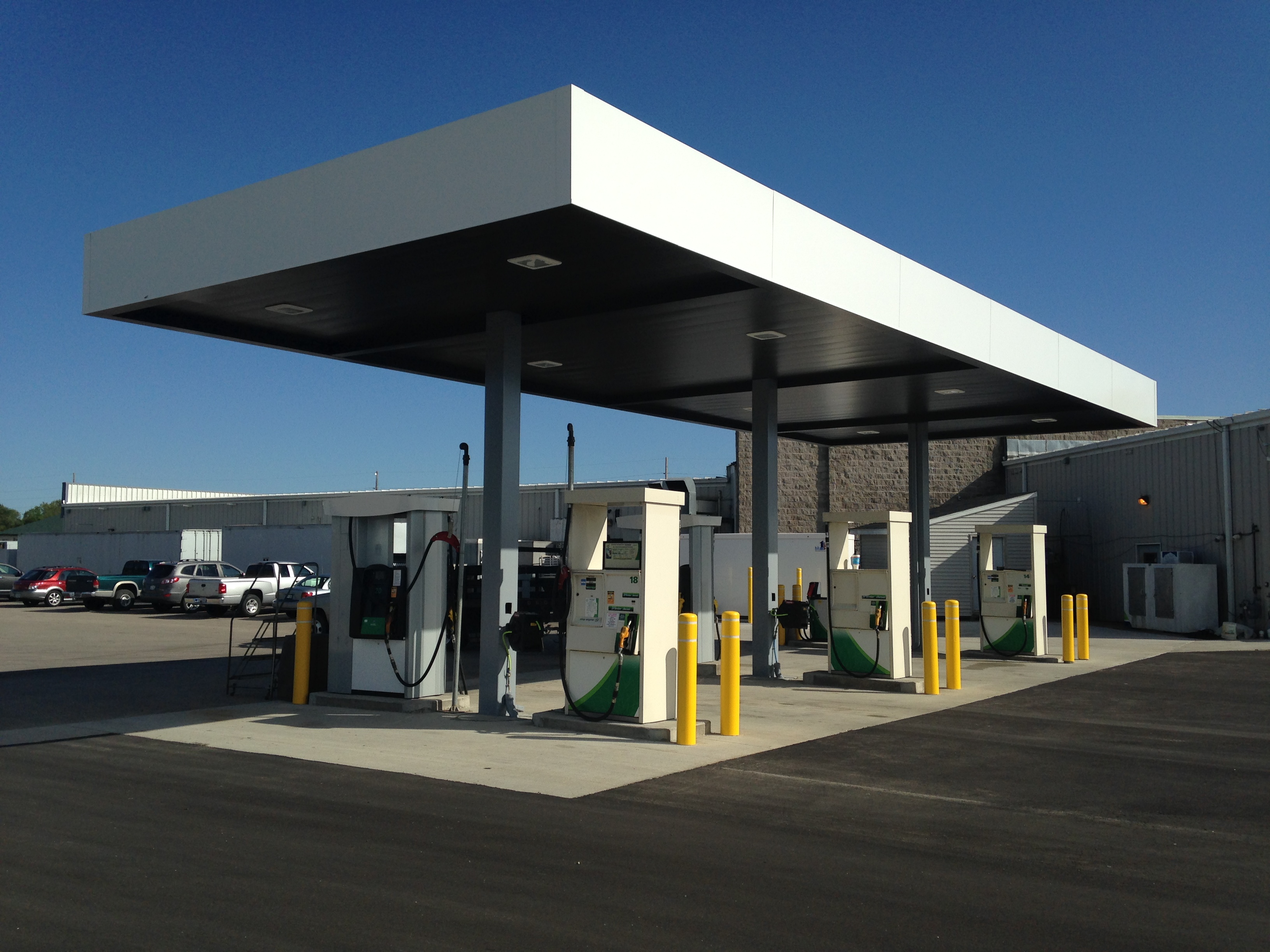
LED canopy light wattage increase as Energy Conservation code decrease allowed wattage
Over the past 6 years I have noticed some changes in canopy light fixtures, and recently one that could be an issue for meeting energy conservation codes.
Brief History
When LED lights made specifically for gas station canopies really hit the market about 6 years ago, it was cost effective to use the 72-99 watt fixtures compared to 320 watt metal halide fixtures. It took a few years, but the increase in upfront material cost would be offset by the overall savings in power consumption. At least one energy conservation code in 2011 would eventually require no more than 1.25 watts per square foot, eliminating metal halide lights as an option. LED lights easily met that standard. Soon, other types of lighting entered the market that also used less wattage, such as induction fluorescent.
LED Wattage increases
While energy conservation codes and billing power companies care only about wattage, the light industry changed their focus to talk about lumens and brightness. All the while, the LED fixtures most commonly used on a gas station canopy began creeping up in wattage consumption. Today, it is not uncommon for an LED canopy light to use 114-140 watts. This is still beneficial for power consumption compared to the many metal halides still in use.
Decreased allowed wattage
However, energy conservation codes are trending to decrease allowed wattage. A gas station canopy now can only use 1.0 watts per square foot in a highly commercial zone and 0.8 in other settings. There are cases where a 114-140 watt LED light as typically spaced on a canopy may not meet the code. I advise to double check the light fixtures meet the energy conservation code before sending any purchase orders, as the watts per square foot are dancing a finer line to meeting code.
Sarah Weinberger